The Stuff and Flavor of a Different Time

November 23rd, 2011

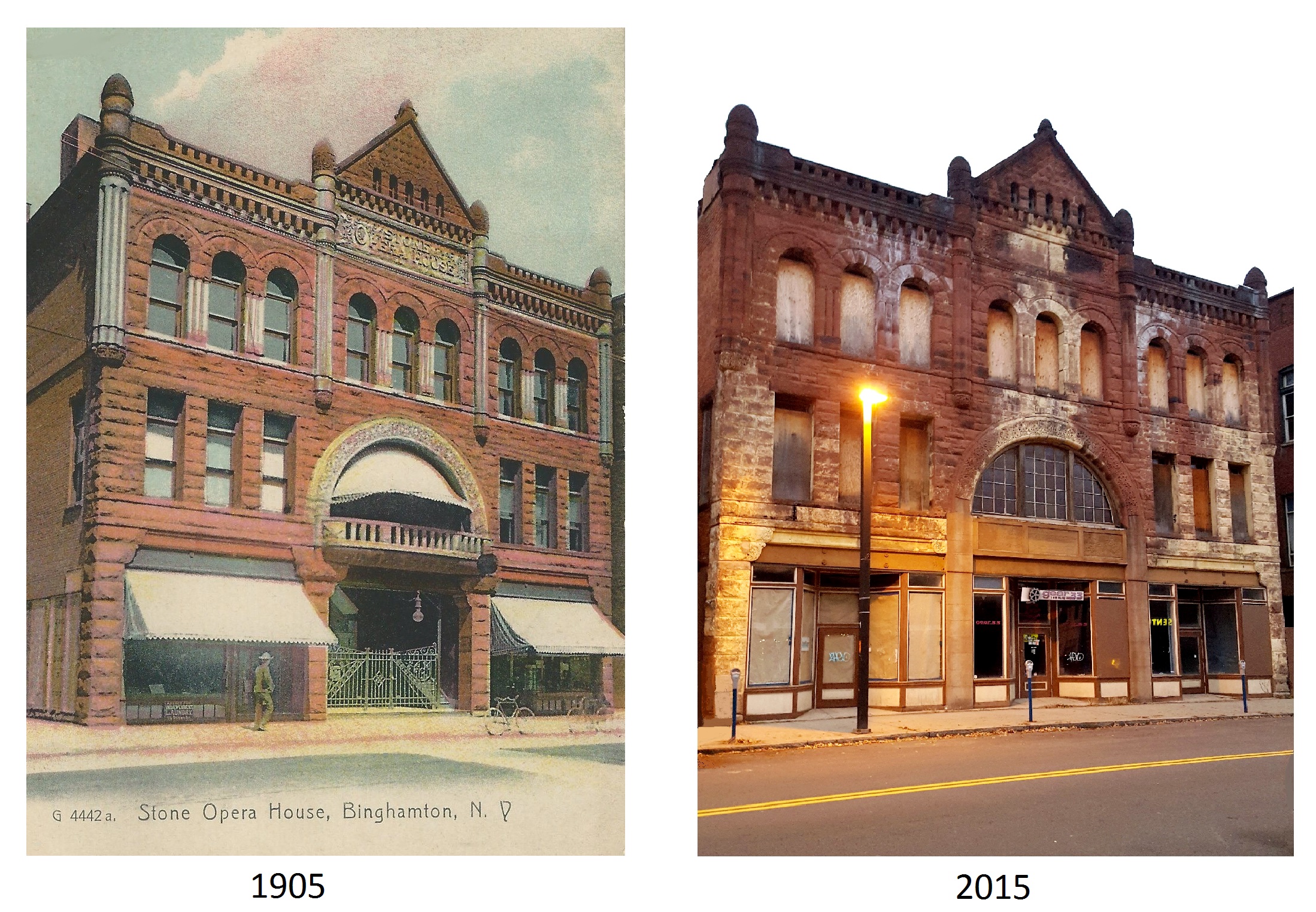
I just did something a little strange: I ordered a circa 1919 Montgomery Ward catalog on eBay.

It’s particularly unusual for me since I often take a free moment to call catalog companies and tell them not to send me their glossy pages of wares. I am the opposite of a shopper. I am a chucker. I like less stuff, not more.

(When my teenage daughter and I were helping my mother pack up for a move to a smaller place, I whispered to her, “Don’t worry, when my time comes, I won’t have this much stuff.”

“Oh, Mom,” she said shaking her head, “by then you’ll be living out of a backpack.”)

But I need this particular catalog because I just started a new novel. It’s historical fiction, set  in 1919, and I need to know about the stuff.

So far, all my novels have taken place squarely in the present. But when I finished my most recent novel last spring, and began to think about the next project, I didn’t have a clear idea of the story I wanted to tell. So I started taking a look at stories that have spoken to me, were memorable, entertaining, inspiring, edifying in some way.

One night my family decided to watch the movie A League of Their Own, which is based on our country’s brief but fascinating experiment with women’s major league baseball. I got to thinking how it’s not only a good story with memorable characters, but it also has that added nutritional value of teaching us about a mostly-forgotten, but intriguing piece of history.

And it got me wondering about a related historical issue: women’s suffrage. What was it like to live in a time when intelligent people debated whether it might be dangerous to let women to vote? In my own state of Massachusetts there was a law passed in 1915 specifically denying women the right to “enfranchisement” as they called it. What would it have been like to live in a family where people had differing opinions about it—to be a girl coming into adulthood, thinking about her future, with all this furor about what women should and shouldn’t do flying around?

As much as we feel our own times are bristling with rapid change, people in 1919 felt the same. A war of unprecedented scope had just ended, the Spanish Influenza epidemic had killed half a million Americans in a matter of months, Prohibition had just been signed into law, and yet at the same time social mores were becoming much looser.

So, I’m delving into history books, newspapers, fiction from that time, everything I can find that will give me the facts and the flavor. It’s pretty intimidating to think about tossing all this new knowledge into the usual juggling act of plot, characters, setting, relationships, etc. But little by little I’m starting to get a sense of how to integrate it with the story I want to tell.

At the moment, what really intimidates me are the clothes. I barely notice the fashions in my own time, how am I going to properly convey what women were wearing almost a hundred years ago? Apparently there were corsets for some, girdles for the more modern, and for the truly avant guard … no hardware whatsoever! No wonder so many people thought the world was going to hell in a hand basket.

I’m learning that people are worried about that hand basket trip in every age. And as soon as my catalog comes, I’ll know just what they were wearing in 1919 as they prepared for whatever surprising thing might happen next.

Up Close and Virtually In Person

October 31st, 2011

I had been “visiting” book groups by phone for years. I’m always happy to do this—it never gets old hearing that people who are unrelated to me and don’t owe me favors chose one of my books over millions of others to read and discuss.

Also, it’s usually really fun. It’s interesting to hear different takes on something you poured your heart and years of your life into, there are always questions you haven’t heard before, and let’s face it—book group people are generally down for a good time. It’s pretty easy to make them laugh.

Last spring a book group wanted to “visit” using Skype, a video-conferencing software program.

“Sure!” I said. “I’d love to!” Then I turned to one of my in-house computer experts—also known as teenagers—to set it up for me.

Everything seemed to be going well, and it was so much nicer to chat face-to-face rather than respond to disembodied voices over a speakerphone. Then my 11-year-old burst into the room.

“Mom,” he said. “Can we get a trampoline?”

I did what I usually do when one of my four cherubs interrupts me on a work call: I gave him the mean-mom-don’t-bother-me-now face and waved him out of the room.

Then I turned back to the computer screen, ready to continue. That’s when I truly got the downside of Skype: when you’re making the mean-mom face … THEY CAN SEE YOU.

Here are some tips on Skyping for both authors and groups:

  • Confirm the meeting time, time zone and Skype account name the day before. Schedule your session at least 15 minutes after the group is planning to gather, so they have time to arrive, catch up with each other and settle in before starting.
  • Set the expectations: will the author give a talk, or is it just questions and answers? I tell people to expect me to be with them for 30-45 minutes, but I’ll stay longer if they still  have burning questions.
  • Do a sound/video check just before the meeting. There’s nothing worse than working out tech issues while people are waiting.
  • Adjust the height of your camera so it’s level with your eyes, not sitting on your desk and pointing upward. No one wants to look up your nose! For book groups, position the camera and the group so everyone can be seen.
  • Position lights so you look lit, but natural. Make sure the background is pleasant—not the open door to a closet full of old sports equipment or stacks of haphazard files.
  • In case the Skype connection gets lost or frozen, authors should get the phone number of the house where the group will be meeting, and groups can set up a speakerphone as back up.

I asked some of my author pals for their Skype-related stories:

Randy Susan Meyers: “Before doing my first Skype I practiced by having Skype conversations with my sister, daughter, husband … anyone who’d sit still for it. Of course, even with that I made a total fool of myself by craning my neck to see members who were out of screen view.”

Julie Buxbaum: “When I used to Skype with book clubs from London, it was almost always in the middle of the night my time. So I would get up, put on a nice shirt and some lipstick, and pretend like I wasn’t actually wearing hot pink pajama pants. Actually, those were some of the most fun meetings I’ve had, because I was always just a tiny bit delirious. On at least one occasion, I had my baby asleep in my lap.”

Melanie Benjamin: “I once had my picture taken in a Skype session—the book club all gathered behind the laptop they were using, so that my face was on the screen in the middle of them, and they took my picture! I felt a bit like Max Headroom.”

Heidi Durrow: “I tell them in advance that I’ll likely wear pajamas or a hat if I’m coming from the gym. I also like to show them stuff on my desk, like the blue bottle I found in a thrift store the day after writing that image into the book.”

Cathy Buchanan: “Sometimes I feel so much a part of the book club that I need a glass of wine. So here’s another tip: have wine on hand.”

Here’s a list of Great Book Club Suggestions by the Fiction Writers Co-op, an author’s group I belong to. All of these authors are happy to phone or Skype with book groups … but now you know—they might be wearing their pajamas.

You Wrote a Novel … Now What?

September 16th, 2011

In 2005 I wrote the last lines of my very first novel.

“I finished,” I told my husband.

“Honey, that’s great!”

“Yeah … But what am I supposed to do now?”

Honestly, I’d had doubts as to whether I could even complete the thing, so I was unprepared for taking the next steps. Of course there had been days when I’d fantasized about seeing my novel on a bookstore shelf, but I’d rightly expected that to be a long shot.

“Call Brian,” said my husband. Our friend Brian Kiley writes for The Conan O’Brien Show. He lived in New York. He would know people.

He put me in touch with a neighbor of his in the publishing industry, and she connected me with others. That first novel never did get published, but at least I had an idea of what doors I needed to pry open somehow.

Fairly often, people write to me for advice on what to do once they’ve written a book. Here’s what I tell them:

Congratulations! Please take a moment to bask in the warm glow of this momentous accomplishment. Have a beverage of your choice, no matter what hour of the day it is. Go out to a fancy dinner, or at least take the kids to Dairy Queen for a celebratory Blizzard. Many, many people start novels. You are among the happily obsessed few who’ve actually finished one!

Ahem … that word “finished” … it’s a strangely elusive concept when it refers to manuscripts. And it’s really important that you’ve got the thing in pristine shape before you send it out. My friend Randy Susan Myers, a talented and successful novelist, wrote this invaluable post on polishing up your future bestseller.

Next you need to do some research about which agents to send it to. Randy also wrote a helpful piece on preparing to find an agent and selling your book once you do. I used a book called Putting Your Passion Into Print, but there are many others.

There are also seminars you can take on revising your manuscript and finding an agent. If you’re in Boston, peruse the course offerings at Grub Street, a wonderful center for creative writing.  If not, check out Writers’ Conferences & Centers, a comprehensive listing of writing centers all over the country.

Here are some other good resources:

A word on rejection (actually four words): IT HAPPENS TO EVERYONE. Much like death, taxes, and the effect of gravity on middle-aged skin, rejection is a certainty in the publishing biz. I would say brace yourself, but it’s hard to prepare to hear someone say your literary newborn is ugly. Hopefully knowing that you’re in excellent company will soothe the pain a little.

With every rejection I received I reminded myself of something I’d once heard: JK Rowling’s first Harry Potter book was turned down twelve times (which is relatively few, as it turns out) before she got a contract. Just think how wrong those twelve people were, and how many times they must have kicked themselves since.

If you have advice or suggestions for aspiring writers, I’d love to hear about it. Please share in the comments below.

Deleted Scene: A Bonus Feature from Deep Down True

August 19th, 2011

hand-with-a-crumpled-paper-and-a-waste-paper-basketEver read a book and wonder what you’re NOT seeing—what additional scenes might have ended up on the author’s “cutting room floor”? In the service of pacing, plot, character development or just getting the word count down, every author cuts. And those cuts can hurt! Passages that seemed so critical when they were first written can swiftly become collateral damage in the struggle to revise.

DEEP DOWN TRUE went through a wonderful, necessary and, at times, painful editing process in the quest to reveal the best parts of the story. I learned so much about how to chip away at the extraneous parts, and I’ve been able to bring those skills forward into the next project.

However, writing is art, and art is nothing if not subjective. What my editor and I might decide the story can live without, some readers might have found illuminating or at least entertaining. We all have our opinions on the best passages of any given novel, and we certainly don’t always agree.

The next time you read a book and feel there were aspects that weren’t completely explored or questions that weren’t fully answered—and you will, because no story can possibly answer every question—ask yourself: “Is this the part that ended up in the author’s recycle bin?”

What follows is my original beginning to DEEP DOWN TRUE. It was abandoned in the interest of getting to the action a little faster. It was a change I agreed with … and yet, I still miss it a little. Feel free to leave a comment and let me know what you think!

Dana had been pretty in high school. “Not cover-of-Seventeen-magazine pretty,” her girlfriends had determined, but attractive enough to enjoy a sufficient quantity of boy attention. The girls all agreed that Dana’s lips were her best asset. Full but not too full, they had an inviting quality, the kind of lips that drew boys she barely knew to appear beside her at parties and, emboldened by cheap beer, say, “I have always wanted to kiss you.”

And if they weren’t too unappealing, Dana often would oblige. It was a sort of friendly service she provided, and the boys, having been kissed, would often murmur their thanks and wander away; she drew the line at kissing.

Those lips had lost their luster over the years. They had shriveled slightly, and now had fine lines striping up and down. Like wood grain, she now thought glancing in the mirror. Lipstick only seemed to highlight their waning allure.

It was disappointing, when she thought of it, which wasn’t too often these days. Dana knew nothing stayed the same. Her figure, for instance, had been perfectly acceptable—preferable to boys who liked curves. But it had expanded slightly with each child who’d engaged her body as a jumping off point into the world. She was Ellis Island, made of flesh, to two such beings. There had been one more which she, and only she, seemed to remember hadn’t had its papers or chromosomes in order to pass through, and so had returned to whatever point of origin its tiny, half-formed body had traveled from.

“I wanted you,” she’d imagine telling this never-born baby if they met one day in some unearthly place, “but I understand. I know how things don’t always work out.”

The Telling of Yellowstone

July 13th, 2011

IMG_1611 Yellowstone National Park really knocked me out. I just got back from a trip with my husband and kids, and it’s got to be about the strangest place in the country. The geysers, multi-colored pools, mud pots, hot springs and steam vents all seem like something from another planet.

And there’s beauty at every turn—rivers and waterfalls, canyons and mountains, grassy fields and volcanic rock slides. We swam in a river that was the perfect temperature because boiling runoff from hot springs combines with frigid ice melt from the mountain tops.

Back in the mid-1800s, before it was protected as a park, people who’d been there recognized the value of preserving it. But they had a hard time convincing the general population, the vast majority of whom had never—and would never—see it.

They knew that once people saw it, they would understand. And they were right. Thomas Moran and William Henry Jackson, a painter and photographer, respectively, went along on the Hayden Expedition in 1871, and are credited with the groundswell of popular support for protecting Yellowstone. Their pictures told the story of why this amazing place needed to be saved.

Readers often ask me about the future of the publishing business. (I know this seems like a very strange non sequitur, but hang in there and you’ll get the connection.) The world of books is definitely undergoing massive changes, many of which aren’t terribly comfortable for publishers, agents, booksellers, authors and even, at times, readers.

But our brains are wired for stories. And whether they’re made of words, pictures, music, dance or drama, storytelling will always serve a critical function in the human experience. Stories make us feel something that bulleted facts, financial data and logical arguments do not. Which is why the idea of a national park didn’t catch on until people’s imaginations were engaged with a visual story.

I’m not sure how we’ll be getting our stories in the future. Electronic devices are on the rise, and who knows what might come after that. But stories will always be told because people will always want to hear, see or read them—whether on paper, onstage, on canvas on a screen.

Moran’s actual field sketches and Jackson’s original photos are on display in the Mammoth Hot Springs Visitor Center in northern Yellowstone. They are beautiful, and it’s easy to see why Americans were finally persuaded to protect this wonderful place. The nation owes a debt of gratitude to these two men for telling such a compelling “story.”

THE END

May 17th, 2011

the endIt’s that last glimpse back as he runs for the train, or the sigh as the hot sun sets into the water with an all-but-audible sizzle, or the relief of confirming the killer.

Or not.

The closing words of any novel will either satisfy or they won’t. They’ll leave the reader thinking about the story and the characters, drifting in a semi-trance of remembrance … or making a grocery list and wondering if it’s time for a haircut.

The pressure is intense. For me it’s the part I worry about the most, because when I begin a story I never have a clear sense of the final page. I have a general idea of where the characters could end up, but not exactly how they’ll get there, and certainly not that all-important last paragraph.

To my mind, there are two ways to go after it. The first is organized and rational. Here are some of the I questions ask myself:

  • How much do I want the reader to actually know about how it ended? Should the reader be left with things to guess about? Which things?
  • How neatly do I want it all tied up? Which aspects of the story should reach a full conclusion and which should be left as an ongoing issue?
  • Where will each of the characters end up geographically? Emotionally? Professionally? Who will be happy and who will be unfulfilled?
  • What’s the theme of this story? What’s the last thing I want the reader to consider about this theme?
  • Do I want a dramatic trumpet blare of an ending or a quiet sigh?

The second way is not to go after it at all—to let it come after you. I’m a firm believer that our subconscious minds are doing an enormous amount of work, picking up details, making connections, squirreling away information that our conscious minds are barely aware of. Who hasn’t had the experience of trying desperately to remember something, only to have the answer come when we stop thinking about it?

I try to think about the story with only the lightest touch, usually while doing something else, like taking a walk or a drive or a shower. Definitely not at my desk! I get a lot of ideas just as I’m waking up in the morning, when my mind is still in that dreamy state of receptivity.

I remember the moments when I figured out endings for Shelter Me and Deep Down True very well. Each time the anxiety had been building, and I’d been starting to think I just might come up empty. And each time I eventually realized I’d been carrying the ideas around in my head almost from the beginning, but hadn’t seen them as endings. Suddenly the puzzle pieces shifted, and it all came together. The relief was enormous.

Telling the story I want to tell makes me feel like a gymnast attempting a difficult routine. I love the challenge of it; I love leaping into the empty page and hoping I can get my words to spin and turn so that it all looks graceful and effortless. And the biggest challenge is knowing that even if I get all the moves right, if I don’t “stick the landing,” as they say, I’ll lose important points. It’s the last thing you’ll see me do, and if I do it well, you won’t even know I’m there. Hopefully you’ll be carried off by those last lines as if they created themselves.

When Even Gatsby’s Not So Great

April 13th, 2011

gatsbyMy seventeen-year-old daughter was assigned to read The Great Gatsby. “How do you like it?” I asked. “Hate it,” she said. I nodded. I remembered hating it in high school, too.

But when she asked me to look at the paper she’d written on this hateful book, she included the following passage describing a party at Gatsby’s house:

“The lights grow brighter as the earth lurches away from the sun, and now the orchestra is playing yellow cocktail music, and the opera of voices pitches a key higher. Laughter is easier minute by minute, spilled with prodigality, tipped out at a cheerful word.”

“Wow,” I said, as she looked over my shoulder. “That’s some pretty fantastic writing.”

“Yeah, it is,” she said. “But I still hated the book.”

I had to laugh, because it reminded me of reading The Catcher in The Rye in high school. It’s about a teenager, after all—we were expected to relate, even though it had been written several decades before, and the lingo sounded like a joke. I hated it. I thought Holden Caulfield was whiny!

A couple of years ago, I read The Book That Changed My Life: 71 Remarkable Writers Celebrate the Books That Matter Most to Them. At least five of these great authors listed The Catcher in The Rye.

“Okay,” I thought. “It’s short, it’s sitting on my living room bookshelf, let me take another crack at it.”

I was blown away. I was crying at the end. I wanted to take Holden home and give him a good lunch and the compassion he so desperately needed.

So here’s my question: Why are we ruining perfectly good books—classics, no less—by requiring teenagers to read them, analyze them to shreds and stay up late writing papers on them? Isn’t that the perfect way to make someone hate something—by forcing it down their throats and making them cough up an assignment they’ll forget as soon as they hand it in?

Here’s an idea—let’s make them read current books. I’m not talking about bodice-rippers or whodunits. There’s great stuff out there written in ways that teens can connect with, possibly relate to and maybe even … like.

Here are some ideas, just off the top of my head:

The Glass Castle, by Jeannette Walls
Empire Falls, by Richard Russo
The Secret Life of Bees, by Sue Monk Kid
Outliers, The Story of Success by Malcolm Gladwell

These are all interesting, well-written books with a strong young character or two. Teenagers would have a lot to say about these books, and plenty to ponder beyond the inevitable paper they’d have to write. They can read the classics later, when they’re a little more classic-friendly. Maybe in college, or even when they’re “classics” themselves.

If you had to choose a book that was written in the last ten years to assign to a high school English class, what would it be?

Won’t You Be My Neighbor?

March 29th, 2011

Mr Rogers

I was a huge Mr. Rogers fan. He sang that catchy neighbor song, and told us we were fine just the way we are, and assured us that when the water goes down the bathtub drain, we definitely wouldn’t go with it. You could believe a guy like that. Turns out he was right about the tub drain.

He was right about neighbors, too.

In my novel DEEP DOWN TRUE, Dana Stellgarten is a newly divorced mom with loads of problems of her own. Nevertheless she finds time to cook dinners for a young family with a dad with cancer, through a “fictitious” organization called Comfort Food.

I have an admission to make: Comfort Food is real.

I lifted it—lock, stock and disposable pan—from an organization I belong to called Neighbor Brigade. It was started by two women in my town who received numerous dinners during their own bouts of cancer. Today Neighbor Brigade is growing like every fabulous idea should, and is now in nineteen cities and towns in Massachusetts.

Here’s a story from their latest newsletter:

A Norfolk family has three children, ages 2, 4, and 8. After complaining of head pain and subsequent treatment for an ‘ear infection’ for over a month, their 4-year-old  was diagnosed with a tumor in her skull. She has been responding well to treatment, but treatments are difficult, time consuming and nearly an hour away from home. Her mom wrote recently:

“You have no idea how nice it was to come home and have dinner all ready for us. I was getting ready to go in the house and heat up leftovers from three days ago but I was not looking forward to it! I saw the meal in our milk box and it was like finding a pot of gold! You have no idea how it made my night. We just got through a very long, nail biting day and have another nervous night ahead of us. She is miserable and just wants me next to her, so to have dinner all done for me so I can cuddle on the couch with her, is such a blessing you will never know! Please pass this thank you on to whoever was so nice to make this meal for us!”

Of course, we all want to help a friend or neighbor who’s experiencing that kind of crisis. But what Pam Washek, co-founder and executive director of Neighbor Brigade figured out is:

1. We don’t always know our neighbors.
2. We don’t always know when they’re hurting.
3. We want to know, and we want to help.

Since 2003, Pam and company have honed the program to a dazzling example of compassion and efficiency. They even post what the prior volunteer cooked, so the family doesn’t get chili six times in a row. And there’s no big commitment–you help when you have the time.

If you’d like to start a Neighbor Brigade in your own town, Pam and her team have made it very easy with clear steps and guidelines.

The great and saintly Fred Rogers has gone on to his reward. I’d like to think that when he wrote that wonderful song, reaching out like the Neighbor Brigade does was just the kind of thing he had in mind.

May his neighborliness live on in all of us.

Who Are You Calling Slacker?

March 11th, 2011

one man bandI’ve been told I need to blog more. I am a slacker blogger.

I find this pretty funny, since in most aspects of my life, I am the Anti-Slacker. You should see me on vacation. Before a recent trip, my kids sat me down and told me they were not going to put up with my making them “see everything.” (How abusive!) It was vacation—they wanted downtime. They practically announced this in unison, which was disturbingly convincing, since there’s four of them, and they rarely agree on anything, much less a plan of action. Or inaction, as the case may be.

I’m not resistant to blogging, I just tend to be a late adopter. Maybe most of this are like this—we bop along, doing what we always do, and don’t adjust until someone we like and trust says, “Hey, take a look, you should try this.”

Or in my case, it was when the PR department said, “Um, Juliette? How about doing a little more blogging—your readers might enjoy reading your stuff between novels.”  This was, of course, code for “Blogging has become one of the most important PR tools for marketing books (or pretty much anything) these days. You blogged three times in the last year. Which officially designates you as a slacker blogger.”

I love the PR folks. They’re so gentle. But I can read between the lines.

There’s a hilarious New Yorker piece called “Subject: Our Marketing Plan” by Ellis Weiner. It’s a farcical note written to an author about what will be expected of him in terms of promoting his book. It’s get-your-inhaler funny—in part because it’s a little too close to home. In the Good Old Days (which as a rule, I don’t actually believe in), writers wrote, and that was pretty much it. Now, we’re like Bert in the opening scene of Mary Poppins, a one man band who doesn’t play any of the instruments all that well.

Actually, there are plenty of great blogs out there, and I have to say I really do enjoy them. Beyond the Margins is one of my faves. But wow, they’re so … what’s the word? … GOOD. Can I offer anything nearly as wonderful? If so, can I figure out the most technologically optimized way to offer it? What about next week, when all the technology I boned up on this week will have changed?

So here I am, writing a blog about not blogging. My late-adopter self is adopting, and now I’m off to optimize.

Then I’ll go plan the next family vacation. Lots of museums! I can’t wait.

A Gift Horse of a Different Color

December 15th, 2010

  • I think I have giftlexia. Or would it be dysgiftia? I can express love and appreciation in lots of ways, but gifts are definitely not my strong suit.

    I have friends whom I consider gift savants — seemingly born with the uncanny ability to take one look at a person and know exactly what might fulfill deep, barely conscious wishes. They get me things I never would’ve considered, and now use constantly — an interesting candle holder, a really comfortable hat, funky earrings that were not “me” until I tried them on, and suddenly they were so “me” I wondered how the earrings and I had existed separately for so long.

    The above-mentioned aside, I have to admit I’m secretly not the best at receiving gifts either. I’m polite, I say a sincere thank you, I try to behave as if this thing I was given is the greatest thing ever…because sometimes it is. But sometimes it isn’t, and the world is already so full of unnecessary trinkets and do-dads and stuff. I truly appreciate the gesture, but I’d be just as happy with a heartfelt note.

    So, with the holidays galloping toward us, presents to buy and receive, and the inevitable proliferation of unimaginable ton-loads of stuff, my stress level is beginning to rise…

    Our family celebrates Christmas, and I sincerely love everything about it — the rich piney smell of the tree in the living room, new renditions of old Christmas carols, decorating the house with both the lovely ornaments and the unlovely ones that have nonetheless made their way into family lore and tradition. I love egg nog. I love thinking of Mary, pregnant and poor, giving birth in a barn, and knowing even still, that it was all worth it.

    But I can’t make myself love the gift part.

    People with learning disabilities develop skills to compensate for what their brains don’t do easily. Similarly, I employ about half a dozen little coping mechanisms: starting early, making lists, making my family members make lists, asking other people what they’re buying for their loved ones. I blast my ungiftishness with all the power of my organizational skills which, I modestly admit, are mighty. I go out there, and I shop and check off lists and fill in my spreadsheet — yes, I have a spreadsheet, as absurd as that sounds, and it’s like a security blanket. I look at my spreadsheet, creating order out of gift chaos, and I’m tempted to suck my thumb.

    On Christmas morning, I will anxiously await my family’s reactions to all this effort in the same way I anticipated exam results when I was in school. Did I pass? Did I get an A? And before we all go into the living room to hand out the loot, I’ll insist to myself that it doesn’t matter. They know I love them. And soon it will be January and I can return to the ways that I’m good at showing them. Until then, I’ll try to remember that Mary had nothing but herself to give her baby, and that was most certainly good enough.